
Pokémon Card Detection
A computer-vision application for detecting Pokémon cards in images, recognizing characters, and classifying rarity.
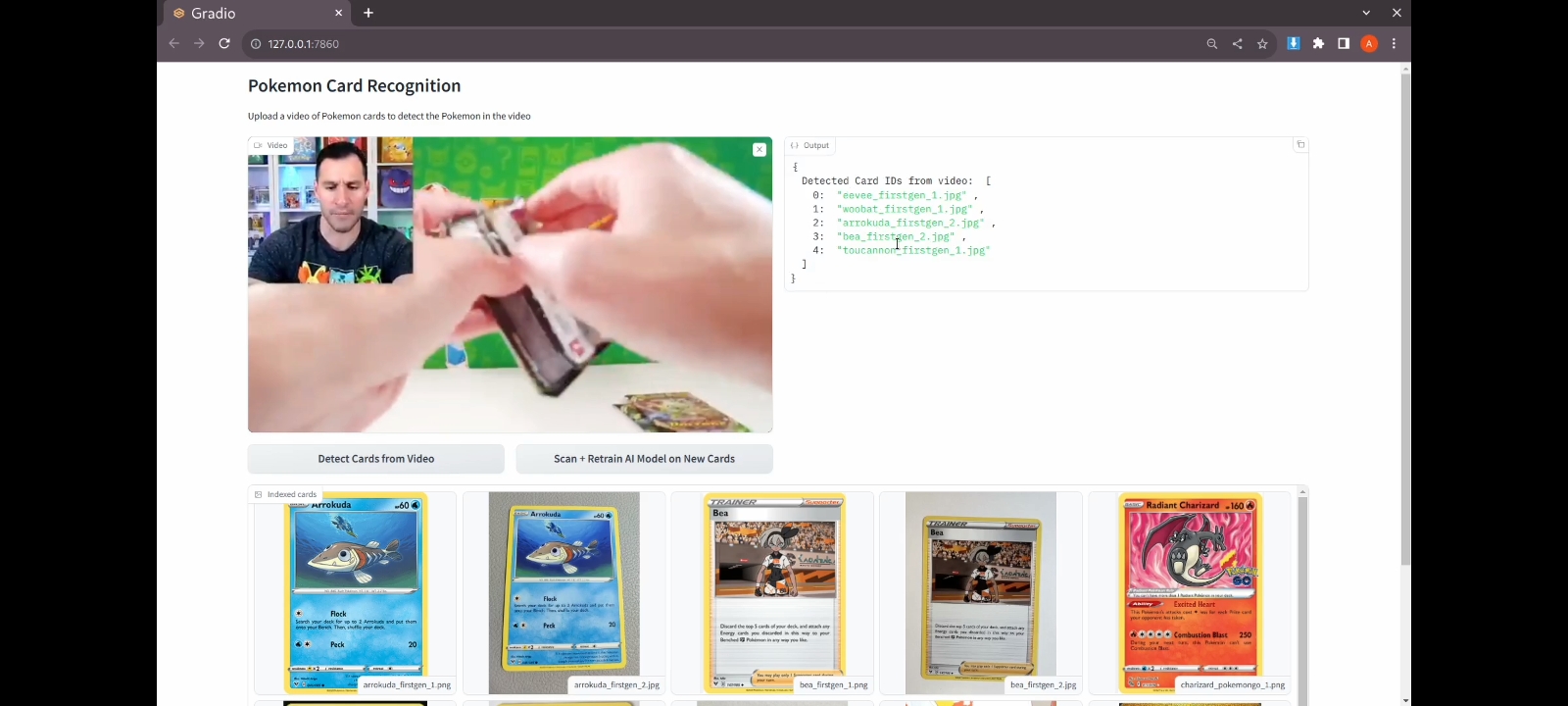
The problem
Pokémon cards have become valuable collectibles, with rare cards often being counterfeited. Authenticating cards and identifying their value requires expertise and can be time-consuming.
Intended users
Collectors and teams building image-based card discovery tools.
Client work & development scope
The project notes describe development of the computer-vision system, including card detection, classification, and a Flask API.
The solution
We developed a computer-vision system that automatically detects and classifies Pokémon cards from images. It uses deep-learning techniques to recognize card features, identify the character, determine rarity, detect visual counterfeit patterns, and connect results with pricing data.
How the system fits together
- Card image
- Boundary detection & perspective correction
- Character & rarity classification
- Pricing-data lookup
Conceptual flow based on the project notes. It describes the main capabilities, not a verified production deployment topology.
Capabilities described in the project
- Card boundary detection
- Perspective correction
- Character recognition
- Rarity classification
- Counterfeit detection
- Pricing integration
Results and evaluation
The system achieved over 95% accuracy when identifying authentic Pokémon cards and 90% accuracy when classifying cards into rarity categories. The model processes images in real time, making it suitable for mobile applications and live video workflows.
Evaluation considerations
- Report detection, character recognition, and rarity classification separately.
- Include lighting variation, perspective distortion, damaged cards, and unseen editions.
- Measure latency on specified hardware and report failure cases as well as aggregate results.
Limitations
Visual patterns alone do not establish a card’s authenticity. Pricing depends on the data source, edition, condition, and update time. Image quality and unfamiliar cards can affect predictions.
What this means for a startup
For a startup, this illustrates how a model can become a product workflow: accepting an image, preparing it for analysis, returning a prediction, and connecting it with useful reference data.
Build something similar
Explore the relevant services, or tell us about the product you want to build.
Discuss your project ↗